
6 Hidden Struggles Muslim Women Face When Seeking Marriage
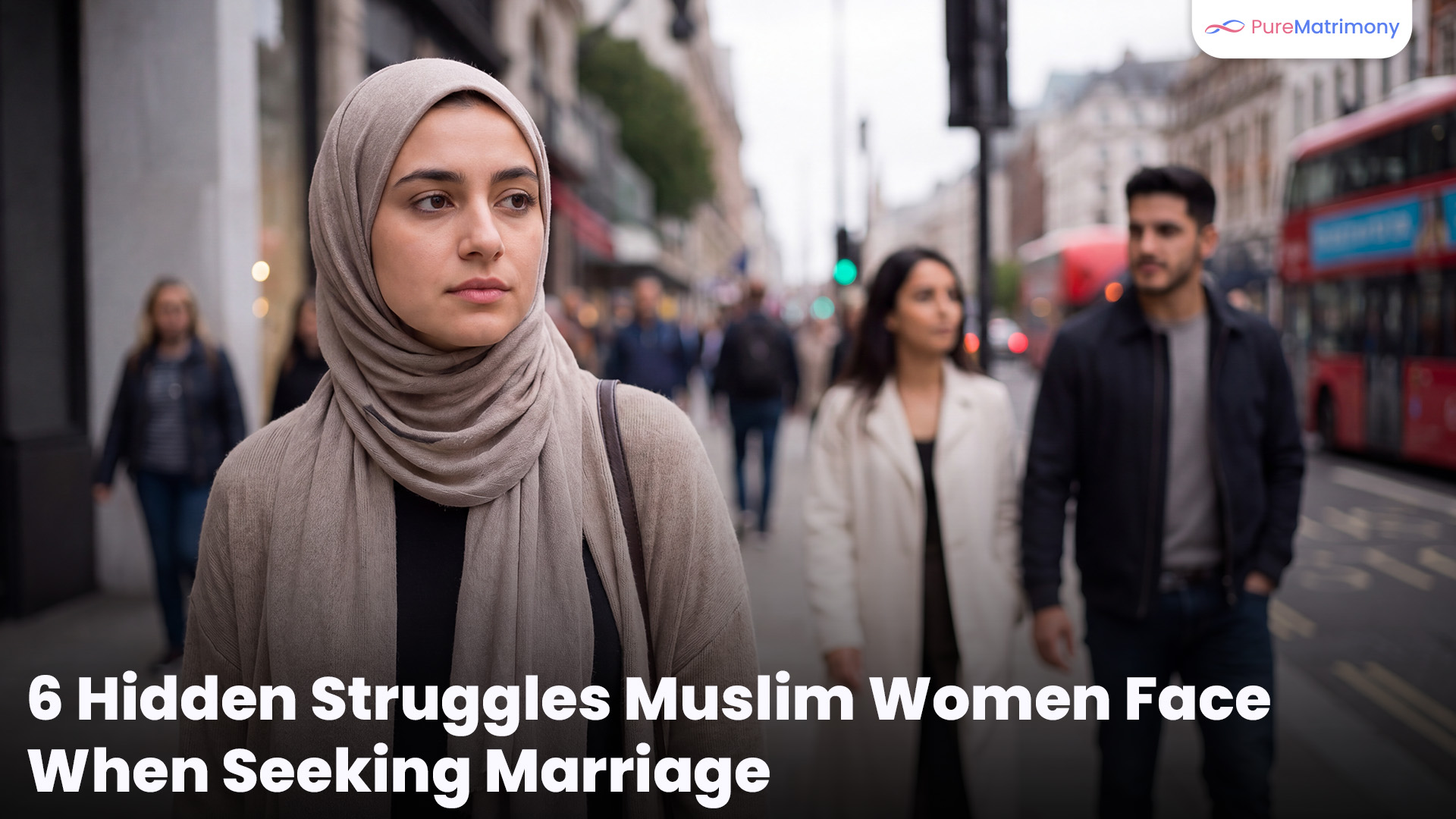
For many Muslim women seeking marriage, the hardest part is not wanting to get married.
It is going through everything that comes with trying to find the right person.
A woman looking for a spouse may be balancing personal hopes, Islamic values, family expectations, and the realities of modern marriage.
Some struggles are obvious. Others are rarely discussed.
There can be pressure to remain patient while also being proactive.
Questions about age can become louder with time.
Family preferences may complicate otherwise promising introductions.
And sometimes, the qualities a woman considers essential are treated as unrealistic simply because they do not fit someone else’s expectations.
None of this means that marriage is impossible.
It means the search deserves more honest conversations.
Here are six challenges that can be easy to overlook.

1. Knowing Which Expectations Are Actually Essential
One of the biggest challenges is separating genuine marriage requirements from preferences that have accumulated over time.
A woman may begin her search with a long list of qualities she hopes to find.
Some may genuinely matter.
Others may have developed from family expectations, social influence, previous experiences, or an idealised picture of marriage.
The important question is not whether a woman should have standards.
She should.
The question is whether every preference deserves the same weight.
Consider the difference between:
- A spouse who takes Islam seriously
- A spouse from a particular profession
- A spouse who lives in a particular city
- A spouse with a specific educational background
These are not automatically equal considerations.
The Quran describes believers as being created from different peoples and tribes and directs attention towards righteousness. Quran 49:13
For women, this provides an important reminder: do not allow a long list of preferences to obscure the qualities that genuinely matter for marriage.
2. Being Judged by Age Rather Than Readiness
Women can face pressure to treat age as a deadline, even though marriage readiness involves far more than a number.
Questions about age can become particularly difficult during family conversations.
A woman may hear:
- “You should not be too selective now.”
- “Your options will become fewer.”
- “You need to settle soon.”
- “Why are you still unmarried?”
These comments can gradually change the way someone approaches their spouse search.
Instead of asking:
“Is this person suitable for me?”
She may start asking:
“Can I afford to reject this person?”
That is a dangerous shift.
Marriage is a lifelong commitment, so decisions should not be driven solely by anxiety about getting older.
Age can be relevant to individual circumstances, but it should not replace thoughtful assessment.
Read More: Culture or Islam? How to Verify Marriage Rules
3. Family Expectations Can Complicate Otherwise Suitable Matches
Family involvement can be valuable, but conflicting family expectations can make the spouse search considerably more complicated.
Families naturally care about their daughters and may have strong ideas about who would make a suitable husband.
They may consider:
- Ethnicity
- Family background
- Location
- Profession
- Financial position
- Education
- Social standing
Some considerations may be genuinely relevant.
Others may reflect preferences that the woman herself does not share.
This can create an uncomfortable position.
She may be interested in someone who appears suitable, while her family focuses on factors that she considers secondary.
The solution is not to reject family input.
Nor is it to surrender every personal decision to family expectations.
Healthy family involvement should allow important concerns to be discussed while recognising that marriage is a significant personal commitment.
4. Finding Someone Who Understands What Practising Marriage Actually Means
Shared Muslim identity does not automatically mean two people have identical expectations of married life.
This can be one of the most subtle challenges for Muslim women.
Two people may both describe themselves as practising Muslims, but have very different understandings of:
- Religious practice at home
- Family responsibilities
- Financial arrangements
- Gender roles
- Career expectations
- Parenting
- Living arrangements
- Relationships with extended family
This is why religious compatibility should involve more than asking whether someone is Muslim.
The deeper question is:
“How do you expect Islam to shape your married life?”
That conversation can reveal differences that may otherwise remain hidden until after marriage.
A woman does not need someone identical to her.
She needs enough shared values and compatible expectations to build a household together.
5. Being Expected to Compromise More Than the Other Person
Another hidden struggle is feeling that compromise is expected from the woman before genuine compatibility has even been established.
Compromise is part of married life.
But compromise should not mean ignoring serious concerns simply because finding a suitable spouse has become difficult.
A woman may be told to overlook something because:
- “Nobody is perfect.”
- “You are being too picky.”
- “At least he is Muslim.”
- “You should give him a chance.”
- “Marriage itself will change things.”
There is wisdom in avoiding unrealistic perfectionism.
But there is also wisdom in recognising fundamental incompatibility.
A spouse should not be selected on the assumption that marriage will transform their character, religious commitment, communication, or treatment of others.
The better approach is to assess what is actually present rather than what someone might become.
6. Searching Seriously Without Losing Yourself in the Process
The spouse search can become emotionally exhausting when every introduction starts to feel like a judgement on your worth.
A woman may experience rejection, unsuccessful introductions, conversations that suddenly end, or long periods without finding someone suitable.
Over time, it can become easy to think:
“Perhaps there is something wrong with me.”
There is not necessarily anything wrong.
Marriage involves two people whose circumstances, expectations, timing, and suitability all have to align.
One person’s decision not to continue does not determine another person’s value.
This is where maintaining a healthy life outside the search matters.
Continue investing in:
- Family relationships
- Friendships
- Worship
- Learning
- Career or education
- Personal development
- Community
A spouse should become part of a meaningful life, not the sole measure of whether that life is successful.
Read More: For Muslims Who’ve Faced Rejection Before: Why It Doesn’t Define Your Next Search
What Should Muslim Women Consider When Seeking Marriage?
A thoughtful spouse search should focus on religious commitment, character, compatibility, and the realities of building a life together.
Before seriously pursuing someone, consider:
| Area | Questions to consider |
| Deen | How will Islam shape our household? |
| Character | How does this person behave when challenged or disappointed? |
| Family | What level of family involvement do we both expect? |
| Finances | How do we view financial responsibility? |
| Lifestyle | Would our everyday lives work well together? |
| Children | Do we share expectations about having and raising children? |
| Communication | Can difficult subjects be discussed respectfully? |
| Future | Are our major life goals compatible? |
There is no formula that guarantees a successful marriage.
But asking better questions can help you make better decisions.
Start Your Search With the Right Priorities
The most difficult part of finding a suitable spouse is often knowing which concerns deserve attention and which pressures can be ignored.
Focus on what will shape your actual married life, and do not let rejection or social pressure determine your standards.
Pure Matrimony helps practising women find someone who shares their commitment to Islamic values.
Begin Your Spouse Search with Clarity
Final Thoughts
Marriage should not be approached as a race against age, family expectations, or community pressure.
For women looking for a spouse, the better approach is to understand what genuinely matters and assess potential husbands with patience and honesty.
Family advice can be valuable.
Personal preferences have a place.
Islamic guidance should remain central.
And compatibility deserves serious attention.
Being unmarried does not mean being behind.
Taking time to make a thoughtful decision is different from refusing to consider marriage.