
How Pure Matrimony Helps Widowed and Divorced Muslims Start Again
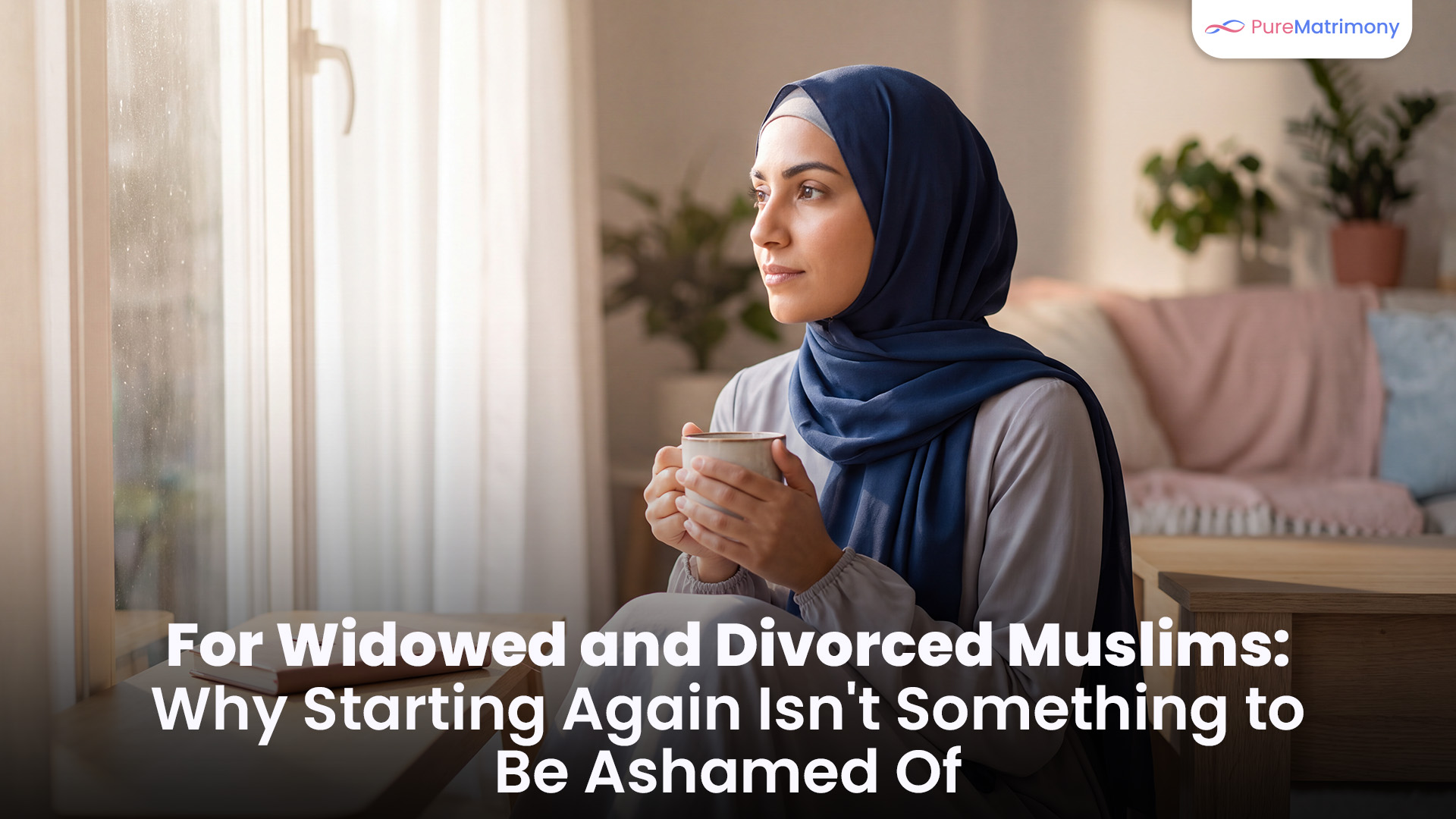
Starting again after divorce or widowhood requires courage. You may carry grief, disappointment, family responsibilities, or uncertainty about whether marriage is right for you again.
Pure Matrimony offers widowed and divorced Muslims a structured way to explore second marriage without entering casual Muslim dating spaces or relying entirely on limited family introductions.
Members can communicate their circumstances, clarify their intentions, and search according to compatibility preferences within a platform focused on Islamic marriage.
A fresh start does not mean forgetting your past. It means using what you have learned to make a more informed decision about your future.
Read More: Comparing Marriage Age Then and Now: What Is Actually Changed?

Is Remarriage Encouraged in Islam?
Islam permits divorced and widowed Muslims to remarry after the relevant waiting period, while protecting their right to make that decision freely.
The Quran directly recognises a widow’s ability to decide her future after completing her waiting period. Surah Al-Baqarah states that widows should observe four months and ten days, after which there is no blame concerning reasonable decisions they make for themselves.
Divorced women must also observe the waiting period relevant to their circumstances before entering another marriage. Because individual situations can differ, anyone uncertain about their Islamic obligations should consult a qualified scholar.
Remarriage is therefore not a lesser form of Muslim marriage. Nor should it be treated as something shameful.
A previous marriage may have ended, but your dignity, capacity for companionship, and hope for a peaceful future remain intact.
Why Can Starting Again Feel So Difficult?
Widowed and divorced Muslims often face emotional, social, and practical concerns that make the spouse search feel more complicated than it did before.
Someone who is divorced may worry about judgment, repeated disappointment, or making the same mistake again.
Someone who is widowed may feel conflicted about moving forward, particularly when love and grief still exist together.
Other common concerns include:
- Explaining the previous marriage
- Introducing a new spouse to children
- Managing relationships with former in-laws
- Protecting financial arrangements
- Facing cultural stigma
- Finding someone who respects existing responsibilities
- Knowing when emotional readiness has returned
These concerns should not be dismissed. They are important compatibility matters that deserve open and thoughtful discussion.
Starting again should not be rushed. It should be approached with greater self-awareness than before.
How Does Pure Matrimony Create Space for a Fresh Start?
Pure Matrimony gives serious marriage seekers a dedicated environment in which previous marital status can be discussed honestly and relevant compatibility can be explored early.
General social platforms may not provide enough structure for sensitive conversations about divorce, grief, children, or second marriage.
A dedicated Muslim marriage app allows people to state that they are seeking Nikah and consider whether a potential spouse understands their circumstances.
Pure Matrimony describes its service as a Shariah-compliant platform offering private profiles, respectful communication, compatibility-based searching, and optional Wali involvement for practising Muslims.
This can help widowed and divorced members move beyond broad introductions and focus on questions that genuinely matter.
1. Clear Marriage Intentions Reduce Uncertainty
A marriage-focused platform helps members establish from the beginning that they are looking for commitment rather than casual attention.
When someone has already experienced a marriage ending through divorce or bereavement, unclear intentions can feel especially exhausting.
They may not want months of conversation with someone who is uncertain about marriage, uncomfortable with children, or unwilling to accept a previous marital history.
Clear intentions allow both people to discuss:
- Why they want to marry again
- What they learned from previous experiences
- Whether they are emotionally ready
- How soon they hope to progress
- What responsibilities already exist
- What kind of home they want to build
Purposeful communication does not mean rushing. It means avoiding unnecessary ambiguity.
2. Privacy Controls Support a Discreet Search
Privacy can be particularly important for Muslims who do not want their personal circumstances, photographs, or spouse search shared widely.
Divorced and widowed Muslims may live within close communities where news travels quickly. Some also need to consider the privacy of their children, former spouse, or extended family.
Pure Matrimony states that members can control who sees their photographs and personal details through private profile and visibility features.
Privacy controls can provide greater confidence, but members should still avoid sharing sensitive information too early.
This includes:
- Home addresses
- Financial account details
- Private information about children
- Legal documents
- Details that expose another person unnecessarily
Discretion should protect dignity without creating secrecy.
3. Compatibility Preferences Make the Search More Relevant
Second marriage often requires a more detailed understanding of compatibility because both people may bring established routines, families, and responsibilities.
Someone marrying for the first time may be building an adult life from the beginning. A widowed or divorced person may already have:
- Children
- Housing arrangements
- Career commitments
- Financial responsibilities
- Relationships with former in-laws
- Established parenting routines
- Strong views shaped by experience
These matters do not make someone difficult to marry. They simply make honest compatibility discussions more important.
A structured Islamic matrimony platform can help users identify relevant preferences before investing heavily in a conversation.
Important areas to consider include:
| Compatibility area | Questions to discuss |
| Children | What role would a new spouse have? |
| Housing | Would either person need to relocate? |
| Finances | What obligations already exist? |
| Family | How involved will relatives be? |
| Faith | What does religious practice look like daily? |
| Communication | How are concerns and disagreements handled? |
| The past | What information should be shared respectfully |
| The future | What kind of marriage is each person seeking? |
Compatibility does not require identical histories. It requires enough understanding to build a workable future.
4. Verified Profiles Can Increase Initial Confidence
Profile verification can reduce some uncertainty, although it never replaces careful checks or observation of character.
Pure Matrimony offers verified profiles, privacy settings, 24/7 moderation, and Wali support within its platform.
This structure may be especially valuable for someone returning to the spouse search after a painful experience.
However, verification should never be treated as proof that someone is emotionally mature, truthful in every detail, or compatible with you.
Before committing, confirm important information such as:
- Identity
- Current marital status
- Employment and finances
- Children and parental responsibilities
- Previous marriages
- Legal obligations
- Family circumstances
- Long-term intentions
References from trustworthy people remain valuable, even when two people meet through a Muslim marriage website.
5. Wali and Family Involvement Can Add Support
Trusted family members, a Wali, or respected community figures can provide perspective and accountability during a second marriage search.
The Prophet Muhammad ﷺ taught that a previously married woman should be consulted about her marriage, affirming her right to make an informed decision.
Support should therefore guide rather than control.
Pure Matrimony describes Wali’s involvement as part of its marriage-focused approach.
A trusted person can help you:
- Notice warning signs
- Ask difficult questions
- Verify references
- Maintain clear boundaries
- Avoid rushing because of loneliness
- Assess whether actions match promises
Someone who has experienced divorce or loss may understandably fear being hurt again. Reliable support can help separate reasonable caution from fear that prevents every opportunity.
How Should You Discuss a Previous Marriage?
A previous marriage should be discussed honestly, respectfully, and without turning the conversation into an attack on another person.
You do not need to reveal every private detail immediately. You should disclose information that materially affects a future marriage.
This may include:
- Why are you ready to marry again
- Whether children are involved
- Relevant financial or legal responsibilities
- Necessary contact with a former spouse
- Health or emotional matters affecting marriage
- Lessons you learned about yourself
Avoid presenting yourself as entirely blameless while describing the former spouse as the source of every problem.
A mature person should be able to explain what happened without unnecessary humiliation, revenge, or oversharing.
For widowed Muslims, discussing the past may involve explaining how the deceased spouse remains part of family memory, especially where children are concerned.
A future spouse should not demand that you erase that history.
What Should You Look for in a Second Spouse?
Look for character, emotional maturity, patience, accountability, and genuine respect for the life you already have.
A suitable person should not make you feel ashamed of being divorced or widowed.
Consider whether they:
- Listen without judgement
- Respect your children and responsibilities
- Communicate calmly
- Accept appropriate boundaries
- Understand that trust may develop gradually
- Are honest about their own past
- Show consistency between words and behaviour
- Want partnership rather than control
- Have realistic expectations of second marriage
Do not assume someone is suitable merely because they are also divorced or widowed. Shared experience can create understanding, but it does not guarantee compatibility.
Read More: How Do I Know If I’m Actually Ready for Marriage in Islam?
Final Thoughts
Divorce and widowhood may change the path to marriage, but they do not remove the possibility of companionship, mercy, and a meaningful fresh start.
A second marriage can benefit from the wisdom gained through earlier experience. You may understand your needs more clearly, recognise unhealthy patterns sooner, and appreciate good communication more deeply.
Approach the search with honesty rather than shame, caution rather than fear, and hope rather than urgency.
Your past should inform your next decision.
It should not decide that no future is possible.
Take the Next Step with Greater Clarity
Starting again deserves more than casual conversations or introductions that ignore your circumstances.
Pure Matrimony helps widowed and divorced Muslims meet serious marriage seekers through a Shariah-compliant process.
Create an honest profile, communicate your responsibilities clearly, and search for someone prepared to respect both your history and the future you hope to build.