
For Reverts: Why Your Marriage Journey Doesn’t Have to Start From Scratch
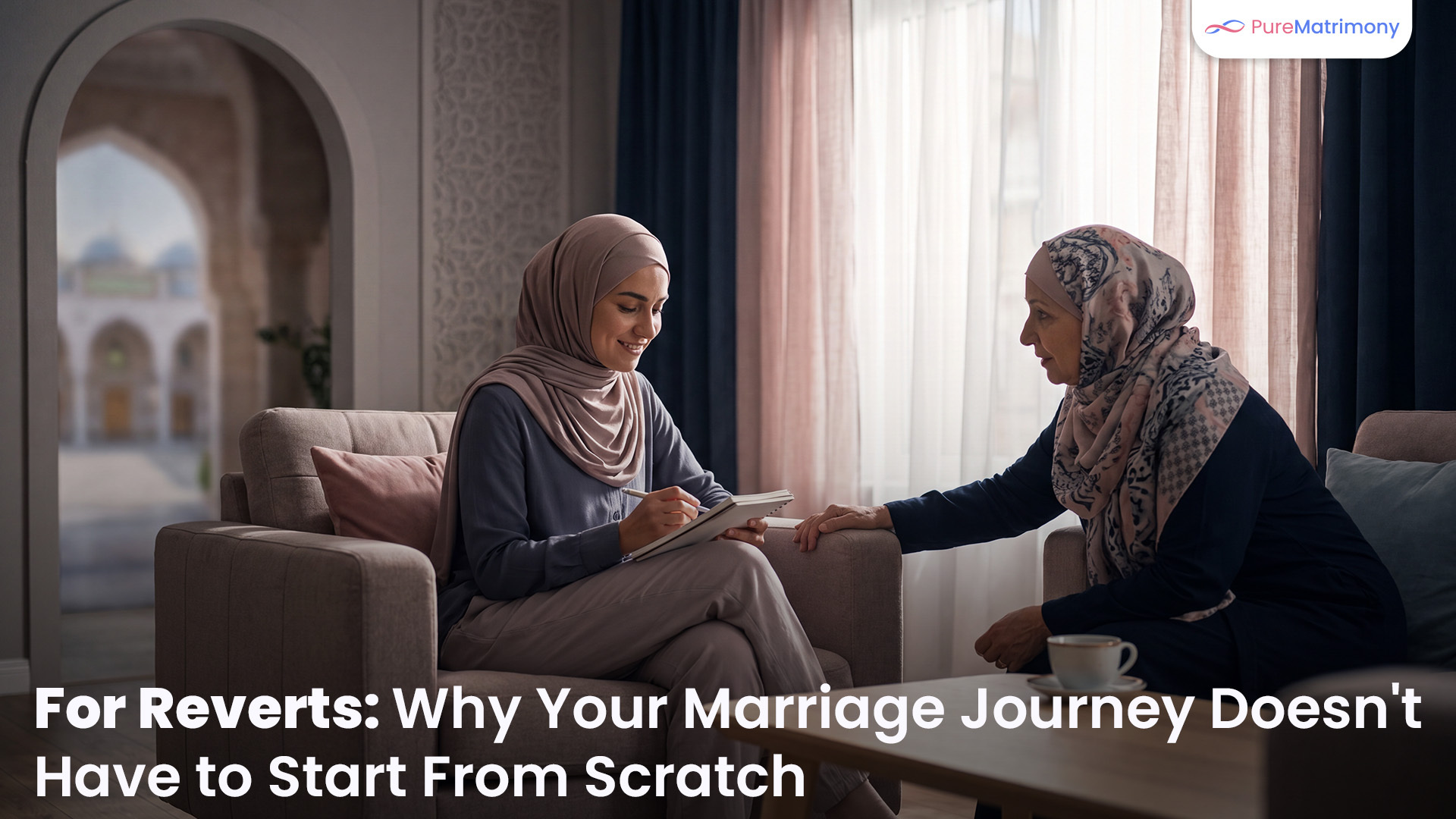
Taking your shahada may feel like the beginning of an entirely new life.
You are learning how to pray, building new routines, meeting the Muslim community, and understanding what Islam asks of you.
Then another important question arises:
How do I find a spouse?
For many Muslim reverts, the marriage journey can feel unfamiliar because the support systems that often help born Muslims may not yet exist.
Your parents may not understand the Nikah process. You may not have relatives arranging introductions. You might not know how to find a Wali or assess a potential spouse according to Islamic principles.
However, you do not need to begin from nothing.
Islam already provides a framework.
Trusted community members can offer support, and a marriage-focused platform such as Pure Matrimony can help you connect with practising Muslims who understand that your journey into Islam is part of who you are, not a disadvantage you must overcome.

Why Can Marriage Feel Different for Muslim Reverts?
Research in the United States shows that converts are a significant part of the Muslim population. Pew Research Center found that 21 percent of American Muslims had converted to Islam.
On the other hand, more recent research from the Institute for Social Policy and Understanding found that Muslim converts were almost evenly divided between men and women.
Marriage can feel more complicated for reverts because they may lack family introductions, Islamic marriage knowledge, and an established Muslim support network.
These challenges are common and do not mean you are failing to integrate into the Muslim community.
Common challenges include:
- Having no Muslim relatives to arrange introductions.
- Not understanding terms such as Wali, Mahr, and Nikah.
- Meeting families who prefer marriage within their own culture.
- Feeling unsure about how to assess a potential spouse.
- Managing the reactions of non-Muslim relatives.
- Feeling pressure to accept the first suitable person who shows interest.
These are practical barriers, not signs that marriage is beyond your reach.
Read More: Everything You Need to Know About Mahr in Islam
Do Muslim Reverts Have the Same Marriage Rights?
Yes. A revert has the same dignity, rights, and responsibilities in marriage as any other Muslim.
Islam does not create separate levels of worth based on ethnicity, nationality, family history, or how long someone has been Muslim.
Allah says that humanity was created as different peoples and tribes so that people may know one another, and that true honour belongs to those with the greatest awareness of Allah.
Your lack of a Muslim family background does not make you less suitable for marriage.
Likewise, a person born into a Muslim household should not automatically be assumed to have better faith (Deen), character, or marriage readiness.
What matters is who someone has become through belief, conduct, and sincere effort.
What Makes an Islamic Marriage Valid?
A valid Islamic marriage requires genuine consent and a clear marriage contract conducted according to Islamic requirements.
The exact legal details can differ between schools of Islamic law, so you should seek guidance from a trustworthy local scholar or Imam.
The main elements generally discussed include:
| Requirement | What it means |
| Consent | Both people must freely agree to the marriage |
| Wali | The bride is represented by an eligible Muslim guardian according to the relevant Islamic ruling |
| Witnesses | The marriage contract is witnessed according to Islamic requirements |
| Mahr | The groom provides an agreed marriage gift to the bride |
| Offer and acceptance | Both parties clearly agree to the marriage contract |
You should also make sure your marriage is legally recognised in the country where you live. A religious ceremony alone may not automatically provide the legal protections connected with civil marriage.
How Can a Female Revert Find a Wali?
A female revert who has no eligible Muslim guardian should seek help from a qualified Imam or recognised Muslim authority.
The Wali supports the bride by protecting her interests, reviewing the suitability of the proposal, and ensuring that the process remains clear and accountable.
A non-Muslim father may still be loved, respected, and involved in the wider family experience, but Islamic rulings concerning who can formally act as Wali should be discussed with a trusted scholar.
A Hadith recorded in Sunan Ibn Majah states that there is no marriage without a guardian and that the authority serves as guardian for the person who has no guardian.
In practical terms, this may mean speaking to:
- The Imam of your local mosque.
- A recognised Islamic scholar.
- The head of an established Islamic centre.
- A trusted Muslim authority recommended by knowledgeable community members.
Do this early rather than waiting until you have already formed a strong attachment to someone.
A responsible Wali should help you evaluate the proposal without controlling you, rushing you, or ignoring your consent.
How Should Reverts Handle Cultural Barriers?
Reverts should distinguish between Islamic requirements and cultural preferences that some families may treat as religious obligations.
Some Muslim families strongly prefer a spouse from the same ethnicity, language, nationality, or social background.
Cultural compatibility can matter in practical ways. Language, family habits, food, expectations, and communication styles can affect married life.
However, culture should not be used to imply that a revert is less Muslim, less respectable, or inherently unsuitable for marriage.
When considering a family from a different background, ask practical questions:
- Will their family genuinely accept a revert?
- Do they understand that your relatives may not be Muslim?
- Will you be respected without being pressured to imitate their culture?
- Can both families communicate with dignity?
- Does the potential spouse distinguish Islam from family tradition?
- Will future children be taught Islam without disrespecting their wider relatives?
The right spouse will not treat your shahada as a problem that needs explanation.
Do You Need to Wait Before Marrying After Shahada?
There is no universal rule requiring every revert to wait for a fixed period before seeking marriage.
However, there may be wisdom in allowing yourself time to establish your faith (Deen), understand Islamic marriage, and build trustworthy community relationships.
A new Muslim may feel especially vulnerable because everything is changing at once.
Marriage should not become a substitute for:
- Learning the foundations of Islam.
- Developing independent religious understanding.
- Building friendships within the Muslim community.
- Healing from previous relationships or major life changes.
- Understanding your rights and responsibilities.
The correct timing will differ from person to person.
Some reverts may be ready sooner. Others may need more time.
The important point is not how many months have passed since your Shahada. It is whether you can make a careful and informed decision.
How Can Reverts Avoid Being Rushed Into Marriage?
Reverts can protect themselves by slowing the process down, involving trustworthy people, and checking character rather than relying on religious language alone.
Unfortunately, appearing knowledgeable or speaking confidently about Islam does not automatically make someone a good spouse.
Be cautious when someone:
- Pushes for secrecy.
- Discourages you from speaking to an Imam.
- Wants marriage immediately without proper questions.
- Claims you must obey them because you are new to Islam.
- Dismisses your concerns as a lack of faith.
- Refuses to discuss finances, family, or expectations.
- Tries to isolate you from Muslim friends.
- Treats your lack of Islamic knowledge as an opportunity for control.
A sincere person should welcome transparency, family involvement where appropriate, questions, and reasonable checks.
Your newness to Islam should never be used against you.
What Should a Revert Look for in a Spouse?
A revert should look for sincere faith, good character, emotional maturity, patience, and respect for their personal journey.
Consider whether the person:
- Practises Islam consistently.
- Respects your pace of learning.
- Understands that your non-Muslim relatives still matter to you.
- Does not expect you to adopt their entire culture.
- Communicates calmly during disagreement.
- Is honest about their financial and family circumstances.
- Wants to grow with you rather than control you.
- Has a family that can accept the marriage respectfully.
- Supports your relationship with reliable scholars and the wider community.
Do not choose someone merely because they know more Islamic terminology than you.
Knowledge matters, but character reveals how that knowledge is lived.
How Can You Involve Your Non-Muslim Family?
You can maintain Islamic boundaries while treating your non-Muslim relatives with kindness, patience, and inclusion.
Your relatives may misunderstand the Nikah because they have never encountered it before.
Explain the process in simple language.
You might describe the Nikah as:
- A serious marriage contract.
- A public commitment witnessed by others.
- An agreement that includes clear rights and responsibilities.
- A religious ceremony that can exist alongside civil registration.
Where appropriate, invite your family to attend as guests and help them understand what will happen.
You should also discuss legal registration. Depending on where you live, completing a civil marriage may be necessary to secure legal rights relating to property, inheritance, children, finances, and separation.
You do not need to choose between respecting your family and following Islam.
Both can be approached with wisdom.
How Can Muslim Reverts Find a Spouse?
Reverts can find a spouse through mosques, trusted community members, convert support networks, family contacts, and structured Muslim matrimony platforms.
The strongest approach usually involves several channels rather than relying on one.
Build Relationships at Your Local Mosque
Attend consistently rather than appearing only when you need an introduction.
Speak to the Imam, teachers, and respected community members. Let trustworthy people know that you are seeking marriage.
Join Revert Support Communities
Convert organisations can provide education, social support, mentors, Wali assistance, and introductions.
Choose organisations with clear leadership and safeguarding practices.
Ask Trusted Muslims for Introductions
Friends do not need to become formal matchmakers, but they may know practising Muslims who are open to marrying a revert.
How Can Pure Matrimony Support Reverts?
Pure Matrimony gives Muslim reverts a structured way to search beyond the limits of their immediate community while remaining focused on serious marriage.
A revert may not have parents or relatives who know suitable Muslim families. That can make the traditional introduction process feel inaccessible.
Pure Matrimony can complement support from your mosque, Wali, and trusted friends by helping you:
- Meet practising Muslims outside your immediate network.
- Explain your conversion journey clearly in your profile.
- Search according to relevant compatibility preferences.
- Focus on people who are seeking marriage.
- Begin purposeful conversations.
- Involve a Wali or trusted person in the process where appropriate.
No platform can replace careful judgement, Islamic guidance, and proper checks.
However, a structured marriage platform can ensure that your search does not depend entirely on whether someone at your local mosque happens to know a suitable person.
Combine the platform with support from a trusted Imam, Wali, and community, then take each step with clarity rather than pressure.
Your Marriage Journey Is Not Starting From Scratch
You may not have inherited the same marriage network as someone born into a Muslim family.
However, you have already developed qualities that matter deeply in marriage.
You have made a life-changing decision based on belief. You have learned unfamiliar practices.
You have faced questions, adjusted relationships, and continued building your connection with Allah.
That experience can produce courage, reflection, sincerity, and resilience.
You are not beginning with nothing.
You are beginning with a story, a faith, and a growing understanding of what matters.