
Rishta Meaning: What a Rishta Is and How the Rishta Process Works
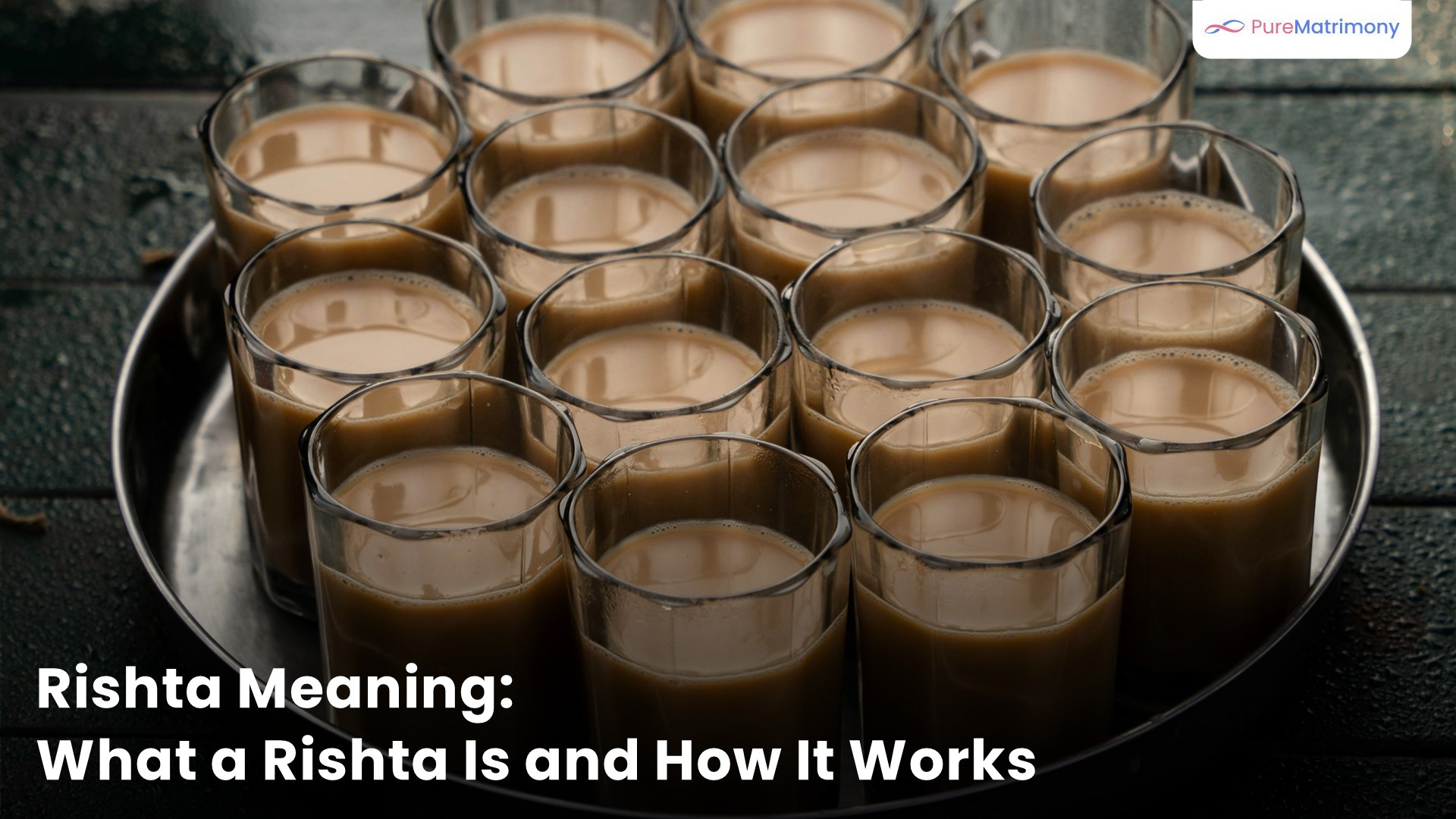
A rishta (رشتہ) is an Urdu and Hindi word that literally means a thread or a relationship. In the context of marriage, it means a marriage proposal or a potential match: “a rishta has come for her” means someone has proposed. The rishta process is the family-led way many South Asian Muslim families find a spouse for their children, through relatives, matchmakers and, increasingly, marriage platforms.
Islam does not prescribe the rishta process itself. It sets the rules that any route to marriage must follow: both people must consent, the Wali and families should be involved, information must be honest, and Deen and character come first. Many rishta customs fit those rules well. Some do not. This guide explains the words you will hear, how the process usually works, and where culture and Islam part ways.

What Does Rishta Mean?
The word comes from Persian. The Rekhta Urdu dictionary gives its first meaning as “thread, string, line”, and from there it came to mean a connection or relationship between people, whether by blood or by marriage. Urdu also has the fuller phrase rishta-e-izdivaaj, meaning the marriage relationship itself.
In everyday speech among South Asian families, rishta is used in a few related ways:
- A proposal: “We received a rishta for our son.”
- A potential match: “Her aunt is looking for rishtas for her.”
- The relationship between two families: “We already have a rishta with that family.”
In English, the closest equivalents are “marriage proposal” or “match”.
Common Rishta Terms Explained
| Term | What it means |
|---|---|
| Rishta | A marriage proposal or potential match |
| Rishta aunty | An informal matchmaker, often a relative or community member, who knows many families and suggests matches |
| Biodata | A short written profile shared between families: age, education, work, family, practice and what the person is looking for |
| Larka or larki dekhna | “Seeing the boy” or “seeing the girl”: the first visit, when one family visits the other |
| Haan | “Yes”: the families’ agreement to proceed |
| Rishta pakka | The match is confirmed by both families |
| Mangni | The engagement ceremony, sometimes with a ring exchange |
| Nikah | The Islamic marriage contract itself |
| Rukhsati | The bride’s departure from her family home to begin married life |
| Walima | The wedding meal given by the groom, a Sunnah |
| Jahez | Goods given by the bride’s family, often called dowry. Islam does not require it |
What Is a Rishta Aunty?
A rishta aunty is the community’s informal matchmaker. She may be a relative, a family friend or a well-connected woman at the mosque, and she keeps a mental (or literal) list of families looking for a match. Some work for free out of goodwill. Others charge a fee.
A good rishta aunty can save months of searching, because she knows families personally. The common complaints are that she may judge matches on looks, height, income or caste rather than Deen and character, and that she may share profiles and photos more widely than a family would like.
If you use one, tell her clearly what matters to you, ask how she shares your details, and do your own enquiries before any meeting.
How the Rishta Process Works, Step by Step
Every family does this a little differently, but most rishta processes follow a similar pattern.
1. Letting the family know you are ready
The process usually starts when parents decide it is time, or when a son or daughter tells them they are ready. It works best when the person getting married starts the conversation and is clear about what they want.
2. Finding prospects
Families look through relatives, friends, the rishta aunty, the mosque and community events. Many British Muslim families now also use marriage platforms, especially when their own networks are small. Our page on Muslim marriage in the UK compares these routes.
3. Exchanging biodata
The families share a short biodata, usually with a photo. This is where honesty matters most. The Prophet ﷺ said, “He who deceives is not of me” (Sahih Muslim 102), and a biodata that hides a previous marriage, a health condition or real income is a deception that the marriage will eventually uncover.
4. Making enquiries
Before a visit, families quietly ask around: what is the family like, how does the person practise, what is their reputation? Done fairly, this is good practice. Our step-by-step guide on how to find a spouse in Islam explains who to ask and what to ask about.
5. The first visit
Traditionally, the man’s family visits the woman’s home, and the families meet over tea. This is the larki dekhna stage. From an Islamic point of view, the couple seeing each other before agreeing is encouraged, not something to be embarrassed about. What matters is that the visit treats both people with dignity, rather than as an inspection.
6. Getting to know each other
If the first visit goes well, the couple usually speak further, by phone or in person, with the families aware. This is the stage to discuss Deen, where you will live, money, careers, children and how both families will be involved. Our list of questions to ask before marriage in Islam covers each of these.
For what is and is not appropriate at this stage, read about keeping the relationship halal before the Nikah.
7. Istikhara and the decision
Before saying yes, many people pray Istikhara for guidance. Our guide explains how to pray Istikhara for marriage and how to read the result. Alongside it, you can keep making dua for marriage throughout the search.
8. Haan, and rishta pakka
When both sides agree, the rishta is confirmed. In Islam, this “yes” must come from the bride and groom themselves, not only from their parents. The Prophet ﷺ said a woman should not be married without her permission (Sahih al-Bukhari 5136).
9. Mangni, Nikah and Walima
Some families hold an engagement, then agree the Mahr and set the Nikah date. The Mahr is the groom’s gift to the bride and is required. Jahez is not. Our guide to Mahr in Islam explains the difference.
Rishta Culture vs Islam
Many families follow customs they have never questioned. Here is where common rishta practices sit against Islamic teaching.
| Common practice | What Islam says |
|---|---|
| Ruling out families of a different caste or biradari | Allah made people into peoples and tribes “that you may know one another”, and “the most noble of you in the sight of Allah is the most righteous of you” (Quran 49:13). Compatibility (kafa’ah) matters, but lineage is not a measure of worth. |
| Judging a girl mainly on skin colour, height or weight | The Prophet ﷺ said: “Verily Allah does not look to your bodies nor to your faces but He looks to your hearts” (Sahih Muslim 2564). Attraction is allowed and important, but it should not override Deen and character. |
| Parents deciding without asking their son or daughter | Consent is a condition of the Nikah. Parents advise and protect; they cannot decide alone. |
| Expecting jahez from the bride’s family | Not required. The financial obligation in marriage falls on the groom, through the Mahr and maintenance. |
| Rejecting a proposal over small details, or leaving families waiting for months | Not a religious requirement. Long delays without reason cause real hurt and should be avoided. |
For a deeper look at what compatibility really means, see compatibility (kafa’ah) in Islam.
How to Write a Good Rishta Biodata
A biodata is often the first impression, so it is worth getting right. Keep it to one page and include:
- Name, age, height and where you live
- Education and work, described plainly
- How you practise: prayer, hijab or beard if relevant, and your approach to the Deen
- Family: parents, siblings, and whether you live with family
- Marital history, if any, and children
- Two or three lines on your character and interests
- What you are looking for, kept short and focused on essentials
Leave out long wish lists and salary expectations. Share photos only with families you have decided to proceed with, and ask that they are not passed on.
When the Rishta Process Gets Hard
The rishta process can be exhausting: repeated rejections, families who stop replying, and pressure from relatives. A few things help:
- Agree the essentials with your parents first, so you are not arguing about the criteria with every new rishta.
- Say no kindly and promptly. A short, respectful reply through the person who made the introduction is better than silence.
- Do not judge yourself by the number of rejections. Many are about the other family’s priorities, not your worth.
Women in particular often carry extra pressure in this process. We wrote about the hidden struggles Muslim women face when seeking marriage, and about why being single is so hard as a Muslim in the UK.
Find a Rishta the Halal Way
For many families, the old network of relatives and aunties no longer reaches far enough. Pure Matrimony is built for practising Muslims looking for marriage, and it lets you keep what works about the rishta process: families involved, clear intentions and enquiries made properly, while widening your search well beyond your own circle. Create your free profile and let the right rishta find you.