
Searching for a Spouse as a Revert? Avoid These 5 Mistakes
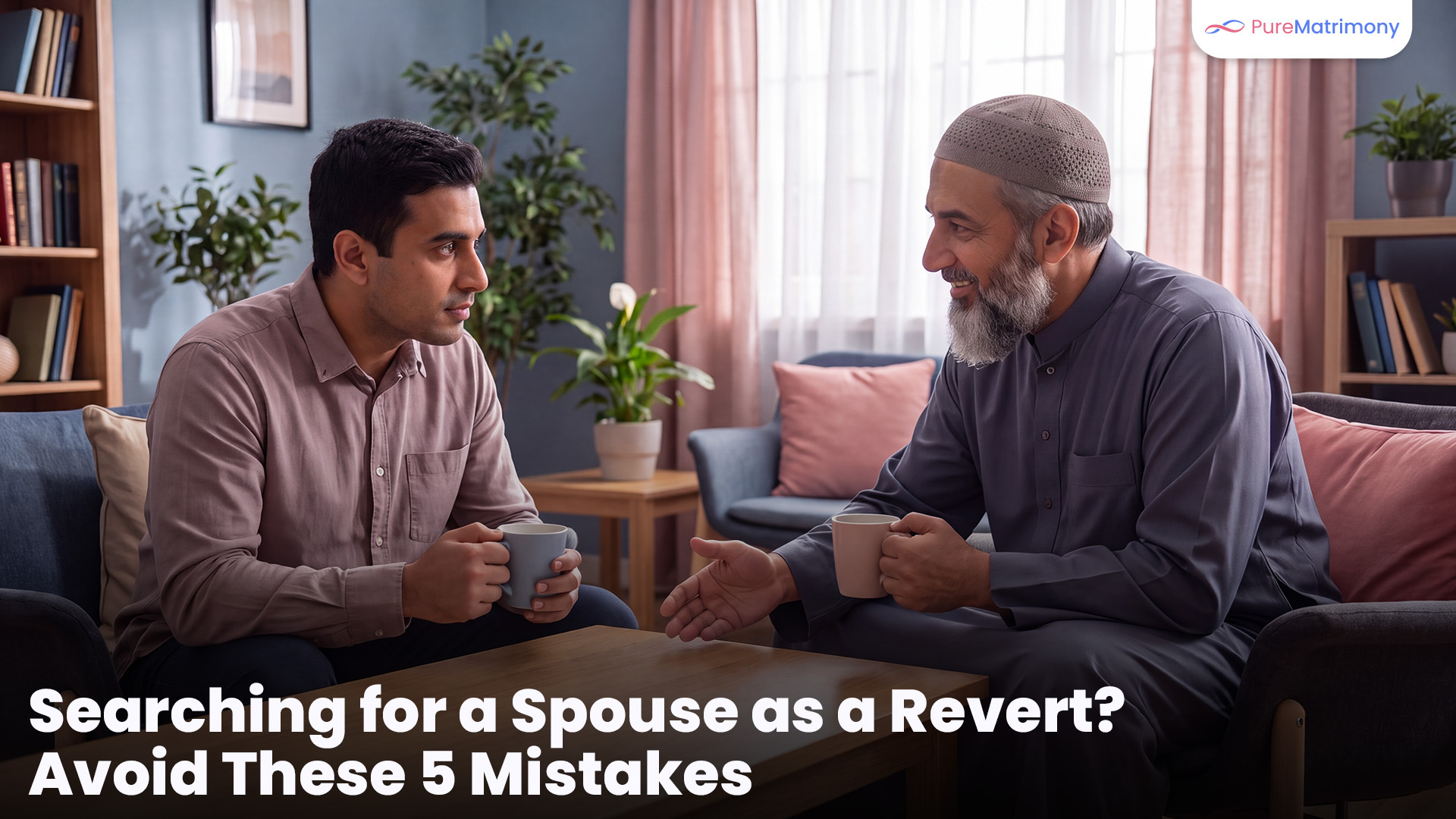
Searching for a spouse as a Muslim revert can feel unfamiliar and overwhelming.
You may be learning Islamic marriage principles while building new friendships, adjusting family relationships, and finding your place within the Muslim community.
Without the support network that many born Muslims inherit, it is easy to feel behind, place too much hope in marriage, or accept advice without knowing whom to trust.
Your marriage journey does not need to be defined by uncertainty.
Avoiding five common mistakes can help you approach marriage with clearer expectations, stronger boundaries, and greater confidence.
Read more: For Reverts: Why Your Marriage Journey Doesn’t Have to Start From Scratch

Mistake 1: Expecting Marriage to Solve Every Challenge
A spouse can support your Islamic journey, but they should not become the solution to loneliness, uncertainty, or every personal difficulty.
Reverting to Islam can change friendships, family dynamics, routines, and your sense of belonging. Some reverts experience isolation when old relationships become less comfortable, but new Muslim friendships have not yet developed.
Marriage can then seem like the quickest route to stability.
You may hope that a spouse will provide:
- A Muslim family
- Religious guidance
- Emotional security
- Community acceptance
- Relief from loneliness
- A clear Islamic identity
These are understandable hopes, but expecting one person to meet every need places too much pressure on the relationship.
Allah describes marriage as a source of comfort, compassion, and mercy. Yet a healthy marriage requires two people who can contribute to that environment.
It should complement your developing life in Islam rather than replace community, personal faith, friendships, and emotional resilience.
Continue building support outside marriage by:
- Attending your local mosque consistently
- Joining classes for new Muslims
- Developing friendships with trustworthy practising Muslims
- Finding a reliable teacher or mentor
- Maintaining respectful family relationships
- Seeking professional support when necessary
A spouse can walk beside you, but they should not carry your entire emotional, social, and spiritual life.
Mistake 2: Comparing Your Journey to Born Muslims
Marriage readiness is measured by sincerity, character, knowledge, and responsibility, not by how long someone has been Muslim.
A revert may feel embarrassed about not knowing every Islamic term, family custom, or marriage tradition. You may compare yourself with people who grew up attending Muslim weddings and hearing conversations about Mahr, Wali involvement, and Nikah.
Read More: Everything You Need to Know About Mahr in Islam
However, being born into a Muslim family does not automatically make someone spiritually mature or ready for marriage.
Likewise, being new to Islam does not make you unworthy of a righteous spouse.
What matters is whether you are:
- Learning consistently
- Honest about what you do not know
- Practising what you understand
- Willing to accept guidance
- Developing good character
- Prepared to fulfil marital responsibilities
The Prophet Muhammad ﷺ directed Muslims to consider religion and character when assessing a marriage proposal. The emphasis is on lived values, not family history or the number of years since Shahada.
You also do not need to master every subject before beginning your search. Learn the essential rights and responsibilities of marriage, then continue growing with humility.
Be cautious of anyone who treats your limited knowledge as an opportunity to control you. A potential spouse should respect your progress, answer questions patiently, and encourage independent learning from reliable sources.
You are not behind. Your readiness depends on how responsibly you are growing today.
Mistake 3: Overlooking Lifestyle Compatibility
Shared Islamic beliefs are essential, but a successful marriage also requires compatibility in everyday routines, expectations, and future plans.
A potential spouse may appear religious and sincerely committed to Islam. That is important, but it does not answer every practical question.
Two practising Muslims can still have very different ideas about:
- Career and education
- Spending and saving
- Living with extended family
- Household responsibilities
- Social activities
- Cultural traditions
- Parenting
- Community involvement
- Communication
- Long-term location
A person may expect you to adopt their family culture completely. They may assume that marrying a revert means there will be fewer family obligations or cultural expectations. Others may underestimate the importance of your relationship with non-Muslim relatives.
Discuss these matters before becoming deeply attached.
Useful questions include:
- How involved do you expect both families to be?
- Would you be comfortable attending events with my non-Muslim relatives?
- What does religious practice look like in your daily life?
- What are your expectations around work and household responsibilities?
- How do you manage money and debt?
- Where do you expect to live after marriage?
- How would we raise and educate children?
- How do you respond when you are angry or disappointed?
Compatibility does not mean agreeing on everything. It means understanding important differences and deciding whether both people can manage them respectfully.
Shared faith provides direction, but lifestyle compatibility determines how that faith is lived together every day.
Mistake 4: Ignoring Your Own Personal Growth
Finding the right person matters, but becoming capable of building a healthy marriage matters just as much.
It is easy to create a detailed list of qualities you want in a spouse without examining what you will bring into the marriage.
Preparing for Islamic marriage for reverts includes developing:
- Emotional maturity
- Clear communication
- Patience
- Conflict resolution
- Financial responsibility
- Healthy boundaries
- Accountability
- Self awareness
Ask yourself:
- Can I accept correction without becoming defensive?
- Do I communicate concerns clearly?
- Can I manage anger without insulting or withdrawing?
- Do I take responsibility for my mistakes?
- Am I honest about finances and past experiences?
- Can I maintain boundaries when I feel lonely?
- Do I expect a spouse to guide every religious decision?
Marriage does not remove weaknesses. Close relationships often reveal them more clearly.
This does not mean you must resolve every difficulty before marrying. It means you should recognise your patterns and take responsibility for improving them.
Personal growth may involve studying Islamic marriage, improving financial habits, speaking with a counsellor, learning to communicate, or healing from previous experiences.
A healthy prospective spouse will also be able to acknowledge their weaknesses. Be wary of someone who presents themselves as spiritually complete, refuses accountability, or uses religious language to silence reasonable concerns.
Mistake 5: Trying to Figure Everything Out by Yourself
Seeking guidance is a sign of wisdom, especially when you are navigating an unfamiliar marriage process.
Many reverts hesitate to ask questions because they fear appearing ignorant. Others may not know which Imam, family, or community member can be trusted.
You do not need to manage the entire process alone.
Build a small circle of reliable support that may include:
- A trustworthy Imam
- A knowledgeable Muslim woman or man
- An experienced married couple
- A revert support organisation
- A Wali where required
- A professional counsellor
- Responsible Muslim friends
For female reverts without an eligible Muslim guardian, a qualified Imam or recognised Islamic authority can provide guidance. Islamic narrations state that the authority may act as guardian for someone who has no guardian.
Ask your support network to help you:
- Understand Islamic marriage rights
- Assess concerning behaviour
- Check references
- Review important questions
- Verify personal circumstances
- Slow the process down when necessary
- Separate Islamic requirements from cultural preferences
Do not rely on one person simply because they appear knowledgeable. Good guidance should protect your consent, encourage questions, and help you make an informed decision.
Learning from other Muslims also helps you see the reality of marriage beyond idealised stories. Ask trusted couples what surprised them, which conversations mattered most, and what they wish they had understood earlier.
Guidance does not weaken your independence. It helps you use it wisely.
Warning Signs Muslim Reverts Should Not Ignore
A serious prospect should respect transparency, boundaries, and appropriate community involvement.
Step back when someone:
- Pressures you to marry immediately
- Encourages secrecy
- Discourages you from consulting an Imam
- Claims you must obey them because they know more about Islam
- Avoids questions about finances or family
- Refuses reasonable identity checks
- Tries to isolate you from friends
- Dismisses your non-Muslim relatives
- Uses guilt when you establish boundaries
- Becomes angry when you request time
A genuine proposal should survive careful questions. Urgency is not proof of sincerity.
Marriage Is a Journey of Wisdom, Not Urgency
A strong marriage begins with thoughtful preparation, informed choices, and steady personal growth rather than pressure to marry quickly.
The five lessons work together:
| Avoid this mistake | Choose this approach |
| Expecting marriage to solve everything | Build Deen, friendships and community |
| Comparing yourself with born Muslims | Measure progress through sincerity and responsibility |
| Ignoring everyday compatibility | Discuss practical expectations clearly |
| Focusing only on finding someone | Develop your own marriage readiness |
| Managing the process alone | Seek trustworthy guidance |
You do not need to make a quick decision to prove your commitment to Islam.
Take time to learn. Ask questions without embarrassment. Verify what matters. Observe character under pressure. Discuss family, money, Deen, children, and daily life before accepting a proposal.
Confidence does not come from knowing everything. It grows when you know how to seek reliable guidance and make careful decisions.
Read More: What It Actually Feels Like to Be Single and Waiting in a Muslim Community
Final Thoughts
Searching for a spouse as a Muslim revert may involve challenges that born Muslims do not always understand.
You may need to build your own support network, learn the marriage process, and explain your family background more carefully.
Those differences do not make your journey less valuable.
Avoid treating marriage as a rescue. Do not measure yourself against someone else’s timeline.
Look beyond shared labels towards lifestyle compatibility. Work on your own character, and allow trustworthy people to support you.
The right marriage should respect your conversion journey while helping you continue growing as an independent servant of Allah.
Begin Your Search with the Right Support
A Muslim revert should not have to depend on chance introductions or navigate marriage without structure.
Pure Matrimony helps practising Muslims connect within a marriage-focused environment built around serious intentions, compatibility preferences, private profiles, and Wali support.
Build your community, seek reliable guidance, then begin your search with confidence.