
Starting Again: What Second Marriage Looks Like for Muslims
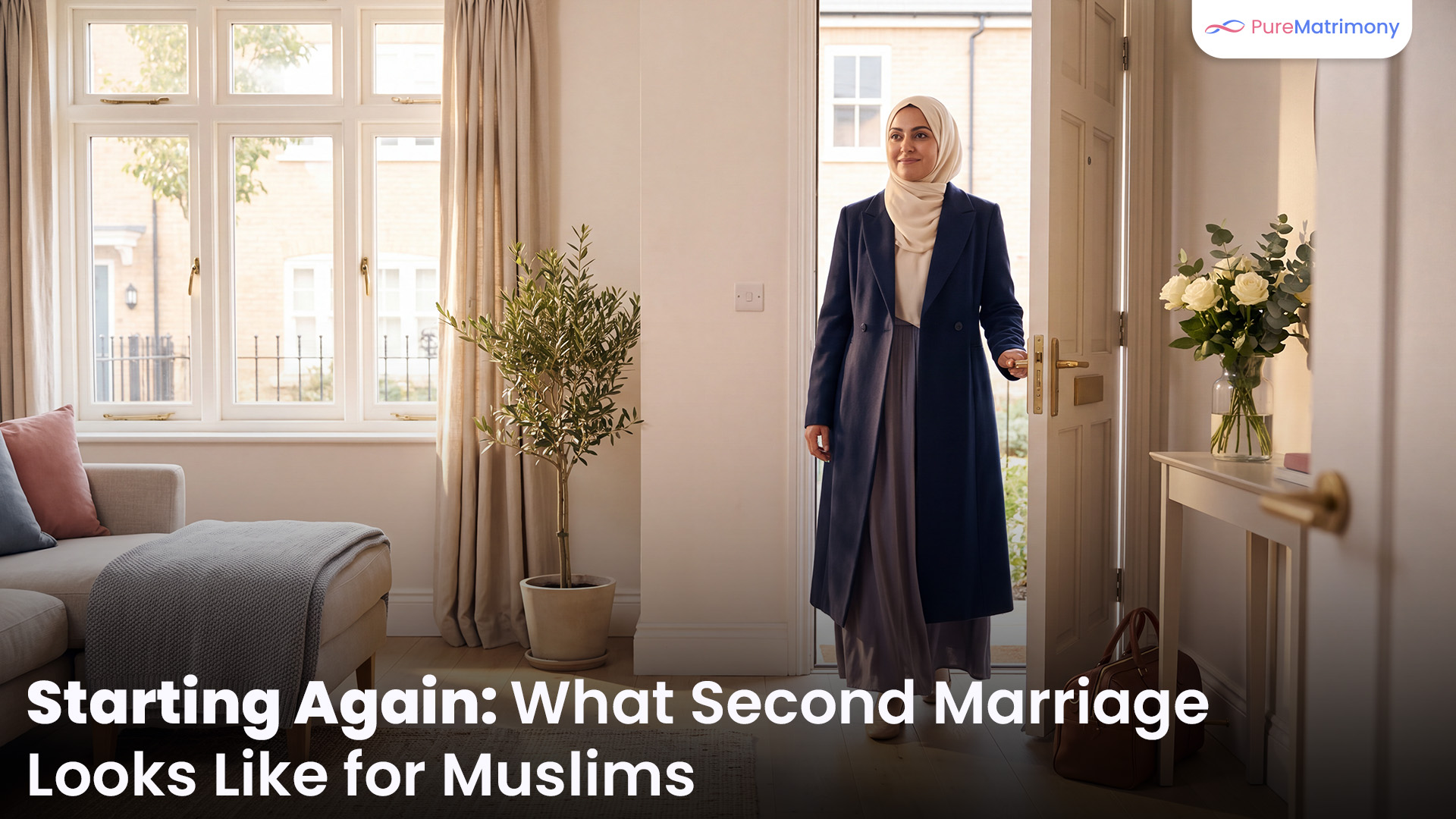
A second marriage in Islam is a lawful opportunity to build a new chapter.
Yet, it may come with responsibilities and expectations that differ from a first marriage.
For some single Muslims, marriage after a previous relationship can feel unfamiliar in a completely different way.
You may already understand what marriage requires because you have experienced it before.
You may also have children, financial commitments, established routines, or lessons from your previous relationship that influence what you want next.
A second marriage does not mean repeating the first.
It means entering another marriage with more experience and potentially more responsibilities.
Understanding those differences before a second Nikah can help both people approach the relationship with greater honesty and realistic expectations.
Read More: How Pure Matrimony Helps Widowed and Divorced Muslims Start Again

Is Second Marriage Allowed in Islam?
Yes, remarriage is recognised in Islam, and a previous marriage does not prevent someone from marrying again.
The Quran directly addresses remarriage following divorce.
In Surah Al Baqarah, Allah instructs that divorced women should not be prevented from remarrying when both parties agree on an acceptable basis after the relevant period has been completed.
Surah Al Baqarah 2:232
The Quran also recognises the possibility of marriage after widowhood once the prescribed waiting period has passed.
This matters because cultural attitudes can sometimes make remarriage seem like an exception or something that should be approached with embarrassment.
Islam does not present it that way.
A previous marriage is part of someone’s history.
It does not automatically determine the quality of their next marriage.
What Makes a Second Marriage Different?
A second marriage can be different because one or both spouses may enter it with previous marital experience and responsibilities that did not exist before.
Someone may now understand:
- What they need from a spouse
- How do they communicate under pressure
- What household responsibilities involve
- How family relationships affect marriage
- Which expectations were unrealistic
- Which values they cannot compromise on
There can also be practical differences.
One spouse may already have children. They may have commitments or ongoing responsibilities connected to their previous marriage.
This means the new marriage is not necessarily starting from an empty page.
It is starting from real life.
That is not automatically a disadvantage.
In many cases, greater experience can lead to clearer expectations and more thoughtful decisions.
How Does Previous Marital Experience Affect a New Marriage?
Previous marital experience can provide valuable self-knowledge, but it should be used for learning rather than comparison.
A person may have discovered that they communicate better when concerns are discussed early.
Someone else may have learned that financial disagreements need to be addressed openly.
Another person may now understand how important family boundaries are.
These lessons can improve a future marriage.
However, constantly comparing a new spouse with a previous spouse can prevent the new relationship from developing naturally.
A new husband or wife is a different person.
They should not be expected to behave like someone from the past, nor should they be punished for mistakes they did not make.
A healthy second marriage gives both people the opportunity to be judged on their own character and actions.
What Changes When Children Are Involved?
Children can make second marriage more complex because the couple must consider parenting, emotional adjustment, household roles, and existing family relationships.
Children from a previous marriage may already have established routines and relationships.
A new spouse needs to understand those realities before marriage.
Important questions include:
- Where will the children live?
- What role will the new spouse have?
- Who makes major parenting decisions?
- How will discipline be handled?
- How will time be divided between the marriage and children?
- What contact exists with the children’s other parent?
- How will extended family relationships be managed?
These conversations should happen before marriage rather than after assumptions have already formed.
A person should not assume that marrying someone with children automatically means becoming a parent in exactly the same way as the biological parent.
The couple needs to establish appropriate roles together.
How Do Financial Responsibilities Differ in a Second Marriage?
Financial responsibilities can be more complicated in a second marriage because existing commitments may continue alongside the new household.
A person may already have:
- Child-related expenses
- Housing costs
- Maintenance responsibilities
- Debts
- Savings commitments
- Existing financial agreements
These responsibilities should not be hidden.
They should be discussed respectfully and honestly before marriage.
Financial transparency does not mean revealing every private transaction immediately.
It means ensuring that a future spouse understands obligations that could materially affect married life.
A second marriage becomes difficult when one person enters it believing they are building one financial household while the other person is still managing significant responsibilities that were never discussed.
Clarity protects both people.
Should You Talk About the Previous Marriage Before Remarriage?
Yes, important aspects of a previous marriage should be discussed when they affect the future relationship, but private details should be handled with discretion.
A potential spouse reasonably needs to understand circumstances that could affect their future.
This may include:
- Children
- Ongoing financial responsibilities
- Necessary contact with a former spouse
- Living arrangements
- Relevant legal responsibilities
- Lessons that have shaped expectations
However, there is a difference between honesty and unnecessary disclosure.
You do not need to turn the marriage search into a detailed account of everything that happened previously.
The objective is not to expose another person’s private life.
It is to give the future spouse enough information to make an informed decision.
Does Previous Marriage Make Someone Better Prepared?
A previous marriage can provide experience, but experience alone does not guarantee marriage readiness.
Someone can have been married for years without learning how to communicate, accept responsibility, or resolve conflict.
Likewise, someone whose previous marriage ended may have developed significant emotional maturity through reflection.
The better question is not:
“How long were you married?”
Ask:
“What did you learn?”
A person who can acknowledge mistakes, explain what they have changed, and discuss their expectations calmly may demonstrate greater readiness than someone who has never experienced marriage but assumes they already know everything about it.
Read More: Why You’re Struggling to Choose the Right Spouse
How Can Muslims Prepare for a Second Nikah?
Preparing for a second Nikah means understanding your existing responsibilities while making space for a new relationship to develop on its own terms.
Before progressing, consider:
- Review what you learned from your previous marriage.
- Identify responsibilities that will continue after remarriage.
- Discuss children openly where applicable.
- Be transparent about significant financial commitments.
- Clarify household expectations.
- Discuss family involvement.
- Consider where you will live.
- Talk about future children and parenting.
- Establish appropriate boundaries with previous relationships.
- Give the new relationship enough space to develop independently.
Preparation does not mean trying to predict every future problem.
It means reducing avoidable uncertainty.
Can a Second Marriage Become a Fresh Beginning?
Yes, a second marriage can become a genuine fresh beginning when both spouses accept the past without allowing it to dominate the future.
The previous marriage may have taught you patience.
It may have taught you the importance of communication.
It may have changed your understanding of family, finances, or responsibility.
Bring those lessons with you.
But leave unnecessary comparisons behind.
The goal is not to recreate what worked before or correct everything that went wrong.
It is to build something new with the person standing in front of you.
Start Your Next Chapter With Clarity
Your past marriage may have shaped you, but it does not have to define your future.
If you are ready to approach marriage again with greater self-awareness, clearer expectations, and serious intentions, Pure Matrimony can help you take the next step.
Begin Your Search Today.
Final Thoughts
A second marriage is not simply a repeat of the first.
It can involve different responsibilities, different family circumstances, and a different understanding of what each person needs.
For Muslims considering remarriage, experience can become a strength when it leads to self-awareness rather than constant comparison.
Be honest about your circumstances.
Discuss responsibilities early.
Consider the needs of children.
Be realistic about finances.
Clarify expectations.
Most importantly, allow the new relationship to become its own relationship.
Your previous marriage may be part of your story.
It does not have to write the next chapter.